Should You Be Using AI to Run Your Google Ads in 2026?
A few days ago I was on a call with a pest control company. Four months into a new franchise, paying a big national agency several thousand dollars a month — and they weren’t allowed to see their own Google Ads account. They’d asked the obvious questions. How many negative keywords are in there? Is it one big campaign, or several? Could they just have a look? They got nothing back.
So here’s the honest answer to the question I’m getting asked more and more in 2026: yes, you should be using AI for your Google Ads. Just not to run them.
Let me explain where the line is — because it’s not where most people think.
Why everyone’s suddenly asking
For the first time, anyone can build a Google Ads campaign in an afternoon. You open ChatGPT or Claude, you say “I’m launching Google Ads for my florist business,” and it will walk you through the whole thing. Keywords, ad copy, structure, budgets. You can even wire it up to make the changes for you.
And at the end, it will congratulate you. “Well done — that’s better than 99% of agencies. You’ve just saved yourself $1,600 a month.”
That sentence is the problem. Not because the campaign it built is evil. Because of what the AI can’t see — and won’t tell you.
The honest answer: it learned from the people getting it wrong
Here’s the part nobody mentions. AI is trained on the internet. And most of the internet’s advice on Google Ads is wrong.
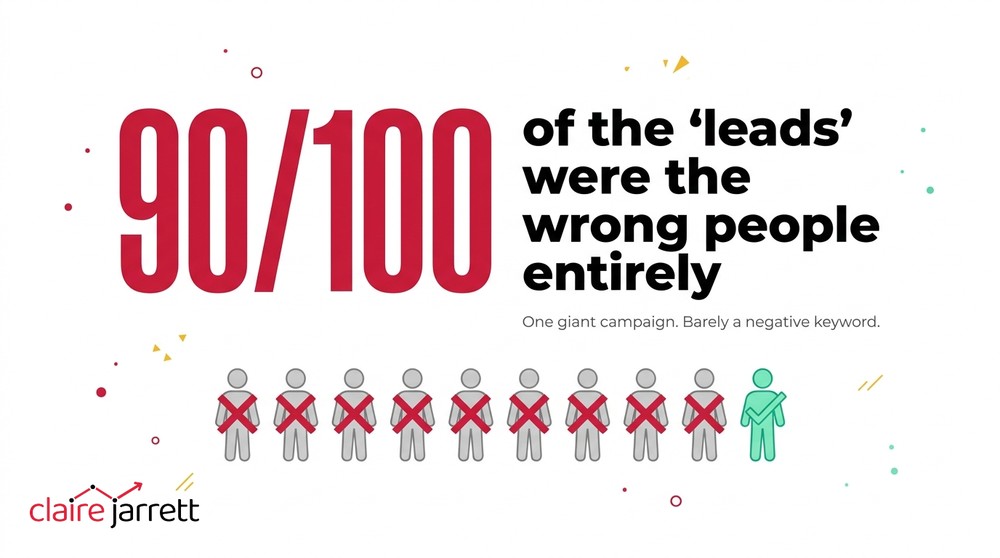
I’ve audited hundreds of accounts in 19 years. Most of them have the same mistakes in them — agency-run, Google Premier Partner-run, “expert”-run. The Display Network left on. Search Partners left on. Performance Max matching against anything that moves. One giant campaign with everything thrown in and barely a negative keyword in sight. The pest control company was paying for “100 leads” a month where 90 were people wanting a tooth pulled or their bins emptied. Someone built it that way. Someone got paid to.
That is the material AI learned from. So when it builds your campaign and tells you it’s beaten 99% of agencies, it might be right — and that’s still not good enough, because 99% of agencies are making the exact mistakes I spend my days unpicking. The best you can hope for from AI alone is a confident, average campaign. In a competitive market — and most of you are in one — average loses money.
The thing it will never tell you: “no”
There’s a deeper issue, and it’s worth understanding because it never goes away.
Ask AI “could you run this better than my agency?” and it will say yes. Every single time. Ask it “should we make these ten changes ourselves?” and it will say yes, I can absolutely help you make all of those changes. That’s its nature. It’s built to be agreeable, not to be right.
So you make the changes. The account does something you didn’t expect. You ask why — and it apologises, agrees with your new theory, and sends you off at a hundred miles an hour in the opposite direction, just as confidently as before. There’s no judgement underneath it. There are no nineteen years of watching what happens next. There’s just a very fluent machine that has never once doubted itself.
And everyone’s account ends up identical
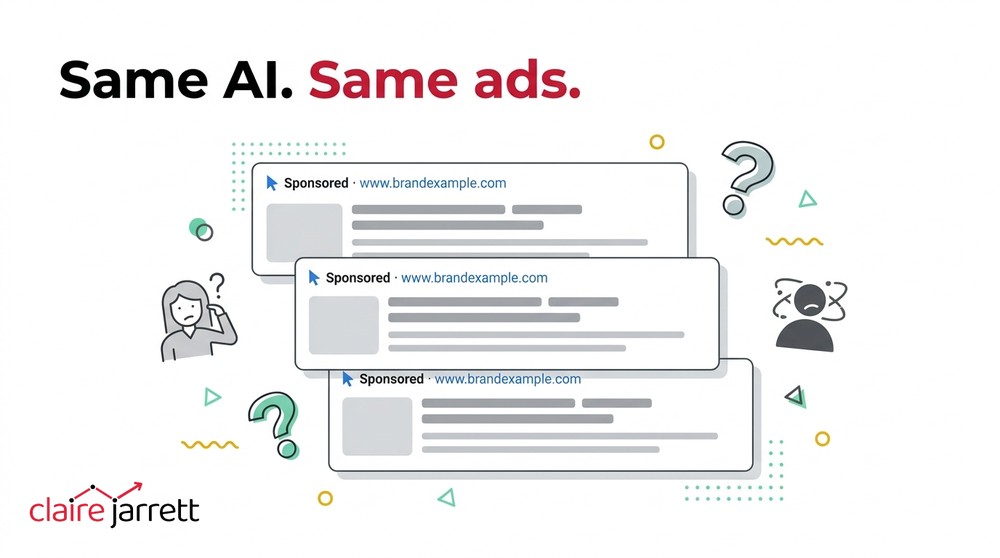
One more. If you ask AI to write your ad copy, you’ll get ad copy. It’ll look fine. The trouble is your competitor asked the same AI, trained the same way, and got the same thing. Same headlines. Same keywords. Same structure.
Before long, an entire market is running near-identical ads. Nobody stands out, nobody can charge more, and the only lever left is to outbid each other until the clicks cost more than they’re worth. AI is brilliant at producing the average. The average is precisely what you can’t afford to be — which is the whole reason reverse-engineering what’s already winning beats inventing from scratch.
So where does AI actually earn its place?
Plenty of places — and I use it every single day. I’m not warning you off it as a sceptic. We’ve built AI tools that work inside my own business. That’s exactly why I know what it can and can’t do.
Here’s roughly where the line sits:
| AI does this brilliantly | A human still has to do this |
|---|---|
| Explains what your agency won’t — what a negative keyword is, what your report actually means | Decides whether the strategy is right for your industry |
| Speeds up the first build once the thinking is done | Does the thinking: structure, intent, what to exclude |
| Analyses your search terms and flags what you shouldn’t pay for | Judges which “wins” are real and which will tank next month |
| Suggests keywords worth a look | Knows which ones convert in your market |
| Watches competitors — new ads, new landing pages | Reads why it’s working, and what to do next |
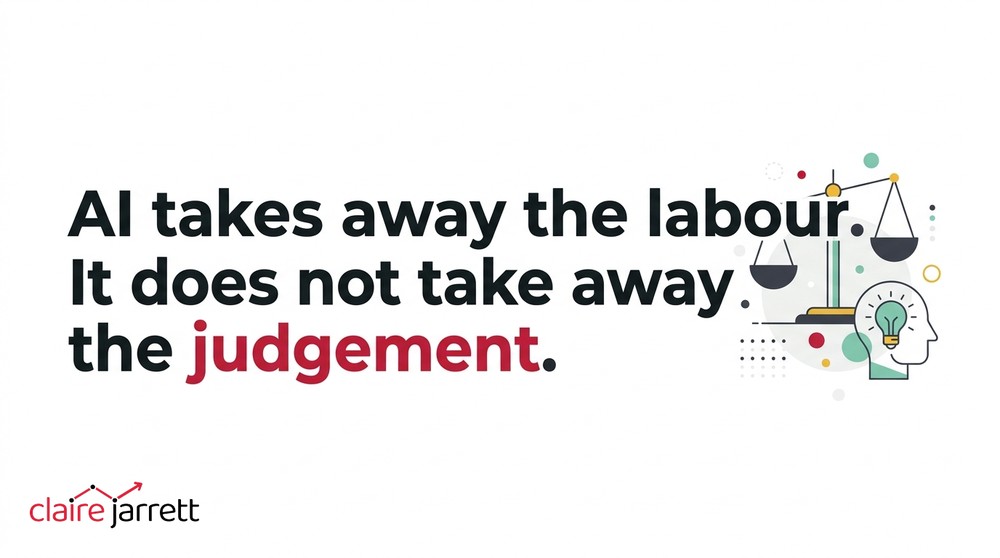
Notice the pattern. AI takes away the labour. It does not take away the judgement. Point it at a clean, well-structured account and it scales the right thing. Point it at a junk account and it scales the junk — faster, harder, and with less of your attention than ever. It amplifies whatever it finds. It multiplies your setup, not your hopes. And the more of this automation Google piles on top, the harder it gets to see what’s happening to your money in the first place.
That pest control company is the perfect example of both halves. AI could have explained every single thing their agency wouldn’t — and they’d have walked into the next conversation knowing exactly what to ask. That’s a real, valuable use. But if they’d then asked it “so should we just run this ourselves?”, it would have said yes — and they’d have swapped one invisible problem for another.
So — should you use AI to run your Google Ads?
Use it to understand your account. Use it to go faster on the work you’d do anyway. Use it to keep an eye on your competitors and to stop paying for clicks that were never going to call you.
But don’t hand it the whole account and walk away. Not because AI is bad — because it has no judgement, it will never tell you no, and it learned the job from the very people getting it wrong. Keep a human who actually knows the platform between you and the spend, and AI becomes the best assistant you’ve ever had. Take that human away, and it becomes the most confident way to lose money I’ve seen in nineteen years.
A few questions I get asked
Can AI build a Google Ads campaign? Yes — in an afternoon. The question isn’t whether it can, it’s whether it can tell a campaign that’s set up to work from one that’s set up to spend. It can’t. That’s a judgement call, and judgement is the one thing it doesn’t have.
Is it safe to let AI make changes to my live account? For small, well-defined jobs with someone watching — adding obvious negatives, drafting ad variations — it’s genuinely useful. For unsupervised changes to budgets, bidding or structure, no. It will agree with whatever you suggest, and you won’t find out it was wrong until the money’s gone. And that goes double for Google’s own automation — here’s what auto-applied recommendations quietly do inside real accounts.
Will AI replace Google Ads agencies? It’ll replace the ones whose only job was the labour — the button-pressing they could never explain anyway. It won’t replace judgement, accountability, or someone who’ll look at your account and tell you the truth. If anything, that’s rarer now, and worth more.
I already have an agency. Can I use AI to check what they’re doing? That’s one of the best uses there is. Paste in your reports and ask it to explain what you’re looking at. If your agency can’t or won’t answer the same questions afterwards, you’ve learned something important — and it didn’t cost you a thing.
Two ways I can help you get this right
Not sure whether it’s AI, your setup, or something else costing you? Book a free Google Ads call and I’ll go through your account with you and tell you the truth — the same way I did for the business in this post.
Or register for my free masterclass — How to Overtake Your Top Google Ads Competitors in 8 Weeks — and I’ll walk you through the whole approach.

Claire Jarrett
Google Ads consultant since 2007, published author (6 books), and Google Partner. Claire was the first person to launch Google Ads training in Europe and has helped thousands of professional service businesses scale their leads.
More about Claire