
What’s New in Google Ads in 2026?

Last Updated on: 29th December 2025, 12:05 pm
Across Search, Shopping, Performance Max, YouTube, and Demand Gen, Google is no longer asking us if we want automation. It’s designing the ad platform with AI in mind. Campaign types are merging, placements are expanding, and ads are increasingly showing up in places that didn’t even exist a year ago, like AI Overviews.
At the same time, Google is responding to human-in-the-loop frustrations. In 2025, we saw big improvements in reporting transparency and control, signalling a shift away from the “black box” approach.
For business owners, managers, and in-house teams, the challenge in 2026 isn’t keeping up with every new feature. It’s understanding which changes actually impact performance, where automation helps vs. where it needs stricter control, and how to adapt strategy as search behaviour changes with AI.
In this article, I’ll walk you through the key changes coming to Google Ads in 2026, along with the advice I am giving to my Google Ads clients for even higher ROI!
Key changes coming to Google Ads in 2026:
- Big Improvements to Google Shopping Ads: Google Lens, Audience Exclusions, Expansion, and Retention
- Performance Max Changes in 2026: Better Visibility, Negative Keywords, and Expanding to Waze
- Search Ads Are changing: AI Max, AI Overviews and New Behaviours, and Asset-Level Reporting
- Demand Gen Making the Upper Funnel More Useful
- Ongoing Data Privacy Changes
1. Big Improvements to Google Shopping Ads in 2026
If I had to summarise the story of Shopping ads in 2025 in one sentence, it would be this:
Shopping ads stopped being just “a way to show products” and started becoming a strategic revenue engine in eCommerce.
Here’s what changed, and what 2026 Google Ads changes you should be thinking about:
Audience Exclusions in Shopping Ads
Before 2025, Shopping was great for getting product impressions in front of people, but terrible at avoiding the wrong leads. You couldn’t tell Google, “Don’t show this to people who already bought,” or “skip audiences that never convert.”
Now you can.
One of the key changes to Google Ads in 2026 is that it finally lets you start shaping who sees your products in Google Shopping ads, not just what they see.
Google’s Bigger Vision for (e)Commerce in 2026
In 2025, Google moved beyond the old Shopping box and started talking about Commerce Media. This is Google’s way of saying:
“We want your product catalogue to be useful everywhere, not just in the traditional Shopping box.”
You’ll start seeing Shopping inventory show up in places like YouTube, Discover, Gmail, and even in some of Google’s AI-driven experiences on Search.
This isn’t just new placements. It’s a shift toward making more of the ads platform and leads at different stages of their buyer journeys available to you and your product catalogue.
Loyalty & Retention: Finally Recognised by Google
For years, Google has focused on getting new customers. But in 2026, Shopping ads will be recognising loyalty more and more, letting you highlight aspects such as:
- Members-only pricing
- Exclusive rewards
… and you’ll even be able to optimise toward retention-oriented goals! And since repeat buyers make up for 41% of your revenue (and even spend more on their orders), this is vital.
Getting someone to buy once is phenomenal, but keeping them coming back is where the real profit lives. One of the key Google Ads changes in 2026 will be being able to do this programmatically through your ads dashboard.
AI Is Now a Part of the Shopping Experience
2025 saw AI go from a “nice addition” to a core part of how product ads show up:
- There are more options for using Google Lens, so shoppers can immediately find and buy products they are interested in.
- Users can ask natural language questions, like “show me comfortable winter boots under $150,” and Google’s AI will show products directly inside the conversational results.
This changes how people find products. It’s not just keyword queries anymore, but natural intent language with personalised needs.
The ads that win will be the ones that are specific and made with a deep understanding of the audience in mind, just as I have always recommended in my Google Ads consulting process.

How to Deal with Google Shopping Ads Changes in 2026
There aren’t just “new features” in Google Shopping in 2026. There are new expectations about how Shopping should work.
Here’s what I’m advising my Google Ads clients to prioritise:
- Treat your product feed like a marketing asset (not a data storage): Google’s AI doesn’t guess well when the data is sparse. It needs rich titles, accurate prices, inventory status, seasonal attributes, and real descriptions. Prioritise your product feed hygiene, as Google Ads will be pulling more and more from it in 2026.
- Start segmenting your audiences by value. For example, past purchasers, high-value shoppers, cart abandoners, and bargain seekers. Then tailor your bids or even exclude the ones that don’t make business sense.
- Keep an eye on what works – then, apply the learnings to the new features. As other advertisers scramble to keep up, you’ll be in a great position if you have reliable data and an advertisement-ready account.
2. Google Performance Max Ads Changes in 2026: More Visibility, but Caution Still Needed!
Performance Max didn’t suddenly become transparent in 2026, but it did stop being such a black box of Google requesting us to put money in and hope its algorithm figures everything else out.
Better Visibility into Where Performance Comes from
One of the biggest changes to Google Ads in 2026, especially Performance Max, is going to be the expanded channel-level reporting.
Instead of everything being lumped together, advertisers can now see how Performance Max is distributing spend and results across:
- Search
- Shopping
- Display
- YouTube
- Discover / Gmail
This doesn’t mean you get full control over allocation – you don’t – but it does mean you can finally spot patterns. For example, when Performance Max is quietly behaving like a branded Search campaign, or when YouTube is driving impressions but not meaningful conversions.
This gives you the ability to see if Performance Max is truly adding value, or if you’d be better off running separate campaigns with more control over them.
Negative Keywords for Performance Max
In 2025, Google rolled out negative keyword support for Performance Max. It’s still limited compared to Search, but it’s a big step forward.
You can now proactively block irrelevant queries, protect branded terms, and prevent Performance Max from drifting too far off course.
Without negatives, Performance Max tends to prioritise volume (even when that volume isn’t profitable). When you add exclusions early, you significantly reduce wasted spend and make sure your ads are being seen by the right leads.
Expanded PMax Inventory in 2026 (Including Local & Waze)
Performance Max also expanded where ads can show, particularly for local businesses and shops.
Placements like Waze mean you can reach leads while they’re actively navigating to places they need, which is an even tighter intent fit. However, as always, make sure you use placement expansions only if they align with how your customers buy.

How to Deal with Performance Max Changes
Even with these improvements, Performance Max hasn’t magically become risk-free. It still makes decisions (bidding, targeting, etc.) you can’t fully see, so I recommend a healthy dose of scepticism.
Based on the results I see across the accounts I manage, here is what I recommend:
- Performance Max is great at scaling once you’ve proven performance and have clean data that shows you exactly what works. If you’re not there yet, hold off and run separate campaigns.
- If everything is Performance Max, you can’t diagnose and fix problems. Use Search for intent and control, Shopping for product performance, and leverage PMax for expansion.
- Control PMax with everything in your toolkit: exclusions, negative keywords, conversion values, reporting, etc. Don’t let it run free – only you know your business inside out.
3. Big Changes Coming to Google Ads in 2026: Search Campaigns
Search has always been the most predictable part of Google Ads, but that’s no longer the case. Between AI Overviews, new AI-powered campaign features, and changing user behaviour, Search in 2026 looks – and behaves – very differently from the Search we learned on.
Search Results Are Changing (Whether We Like It or Not)
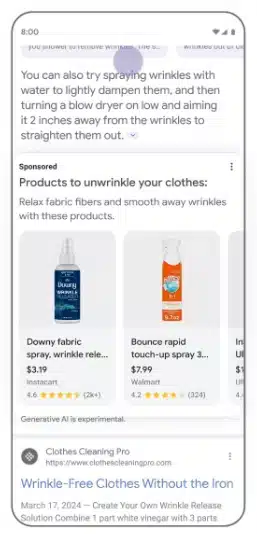
One of the biggest shifts that began in 2024 and accelerated through 2025 is the rise of AI Overviews in Search. Instead of blue links, users are now seeing:
- AI-generated summaries
- Comparisons and recommendations
- Answers before they even scroll
Ads haven’t disappeared, but they’re now appearing around, within, or alongside these AI experiences. Your ads need to be even more relevant, timely, and genuinely useful to very, very specific questions.
AI Max for Search
In 2025, Google introduced AI Max for Search campaigns, a bundle of AI enhancements designed to help Search campaigns adapt to more complex questions and intents. This includes:
- Heavier use of broad match
- Automatically generated ad variations
- Intent-based query matching beyond traditional keywords
The idea is simple: Google wants Search campaigns to respond to meaning, not just wording.
If you have been running your campaigns with intent and audience understanding in mind, you’ll be well-positioned for Search Campaigns v2.
My Favourite Google Ads Change in 2026? Asset-Level Reporting for RSAs
In 2025, Google expanded RSA asset reporting, making it easier to see how headlines and descriptions contribute to performance.
Instead of guessing or testing separately, we can now immediately see which assets Google’s algorithm shows more often (and which get used rarely).
In practice, this means that asset-level insights will help you remove weak ad copy and double down on copy that works for your audience.
How to Deal with Google Search Ads Changes
Search is the beating heart at the core of Google Ads, but with changes coming, you want to make sure you’re adjusting your campaigns accordingly:
- Don’t optimise for click volume. With more precise queries and AI responses, you’ll most likely see fewer clicks but more high-quality conversions. Keep an eye on your reports and optimise for conversions and value, always.
- Use automation, but stay sceptical. Broad match, AI Max, and RSAs can work extremely well, but only when you review search terms regularly and align conversion goals with actual business value.
- Do more audience research. Understand their keyword pathways and buyer journeys. Then, regularly review the wording they use to find you as a solution to their problems. Always create ads with their natural way of searching in mind.
4. Demand Gen: Is It Making the Upper Funnel Actually Useful?
For years, “upper funnel” in Google Ads meant spend money, get views, and hope something good happens later. Demand Gen attempts to fix that by giving us a way to influence consideration.
In practice, this has worked well on battle-hardened accounts, but not so much on new accounts without a historical track record of what works.
In terms of Google Ads changes in 2026, the biggest shift to Demand Gen was that it replaced Video Action Campaigns.
Instead of running separate campaigns on YouTube, Gmail, and Discover with separate goals, Demand Gen brought them under one roof, with a clearer focus on mid-funnel behaviour.
However, this also means that the results aren’t immediate – Demand Gen is still firmly an option if you deal with longer purchase cycles or higher-ticket items where people sometimes take even months to consider their purchase.
In terms of my client accounts, we’ve seen the best results when Demand Gen is used for remarketing to warm audiences first (previous purchasers, cart abandoners, high-intent custom segments, etc.) and then expanded from there.
5. Data Privacy Changes to Google Ads in 2026
Third-party data has been dying off for the last few years (I covered it in my 2024 and 2025 change overviews, as well), and the pattern continues in 2026.
With third-party cookies becoming less reliable, Google is now leaning more heavily on the first-party data and audience signals you can provide. This means it needs your customer lists, CRM and website data, and it needs them to be fresh.
Another key change is that Google expects enhanced conversions to become the norm. Make sure you’ve implemented them on your site (I’ve linked my guide to setting it up) and that they are firing correctly.
Finally, since third-party data is becoming less reliable, conversion attribution will change. It’s now harder to attribute every conversion perfectly across channels and devices, but my recommendation to you is to:
- Compare performance over time, not in isolation
- Look for consistent uplift, not exact numbers
- Use blended metrics alongside platform data
Ultimately, make sure your conversion tracking and data syncs are set up correctly. If you’re not telling Google exactly who your best customers are, it will find time wasters instead.
Google Ads Changes in 2026: AI, Visibility, and Control
If there’s one clear pattern running through Google Ads in 2026, it’s this:
Google is building for a world where intent is more organic, journeys are longer, and automation is assumed – not optional.
So rather than trying to “keep up” with every Google Ads update, 2026 is a good moment to step back and ask the fundamental questions:
- Do my campaigns have clear roles, or is everything trying to do everything?
- Does Google understand what a valuable customer looks like for my business?
- Am I measuring success in a way that reflects real outcomes, not just platform metrics?
- Is my creative actually speaking to how people behave today?
You don’t need a complete rebuild to move forward.
In many cases, the biggest gains come from cleaning up your conversion tracking, tightening your campaign structure, and being more intentional about where automation fits – and where it doesn’t.
Only when you know where your campaigns are strong (and where they are weak) can you leverage the Google Ads changes to strengthen your profits in 2026.
For assistance, contact me. Or, if you’d like to brush up on the fundamentals as we head into the new year, get your copy of my best-selling Google Ads book.
Happy New Year!
