
Top 5 Google Ads Best Practices for 2026

Last Updated on: 30th January 2026, 03:29 pm
We covered the changes to Google Ads in 2022, 2023, 2024, and 2025. Now, the changes to Google Ads in 2026 make it necessary to update our best practices.
I’ve looked at all the upcoming changes and trends I’ve seen in the past year (and beyond), and the campaigns I manage daily. In this article, I’ll show you Google Ads best practices for 2026.
Test New Google Ads Features and Campaigns (Before They Become the Standard)
In 2026, campaign formats like Performance Max, AI Max for Search, and Demand Gen are no longer experimental. They’re central to how Google expects you to run ads, and this automation is becoming the core of how Google builds the Google Ads platform.
Campaign types are blending, placements are expanding, and ads are showing up inside experiences that didn’t exist a couple of years ago (hello, AI Overviews).
Additionally, these campaign types rely heavily on machine learning and AI in PPC, which means the earlier you test them, the faster Google can learn from your data.
Yes, if you’re not a Google Ads specialist, the changes are overwhelming. Unfortunately, you can’t ignore them. The best way to adapt is to test. And your edge in 2026 comes from testing early on purpose, with clean data, and learning what works in your account before it becomes the default.
Test Demand Gen Campaigns properly in 2026
Demand Generation campaigns are becoming more and more important (in 2024, they replaced Discovery campaigns and Video Action Campaigns (VAC)), especially if you want to capture your leads’ interest early enough in the sales cycle to influence them.
However, don’t think of Demand Gen as ‘instant results’ media. Instead, start with warm audiences first (remarketing, Customer Match, high-intent custom segments), and then expand.
Demand Gen campaign types look at your best-performing assets and scale them across channels, which now also include YouTube Shorts. Plus, you’ll be able to target lookalike audiences and optimise for conversions. However, if your account is new and there is no conversion data and no best-performing assets to look at, treat it as a learning experiment and keep a close eye on the movements in your account.
It will take a while to gather and properly analyse that data, so make sure your conversion tracking is solid.

The State of Google Ads Best Practices in 2026 for Performance Max Campaigns
Performance Max is no longer an option, either. More and more campaigns are being converted to this all-encompassing campaign type. Fortunately, in 2026, we’re getting more transparency and insights.
No, Performance Max is still not fully transparent in 2026 – but you finally get enough visibility to spot patterns, like when it’s quietly behaving like a branded Search campaign, or when YouTube is driving a lot of impressions without meaningful conversions. That visibility is what lets you decide whether PMax is adding value… or just taking credit.

Performance Max campaigns are sometimes daunting, particularly to someone who’s not a PPC expert, but when done right, they can help you expand your audience and reach more of your ideal customers.
Is There a Risk of Cannibalisation with Performance Max?
Not anymore. Starting from late 2024, Ad Rank has been determining which campaign to serve if you have both pMax and Shopping Ads running.
However, it’s always good to manually check things – just in case!
Google Ads Best Practices in 2026 for Performance Max
Performance Max delivers your ads on different channels and leverages machine learning to expand your audience, so make the most of Google’s access to searcher data.
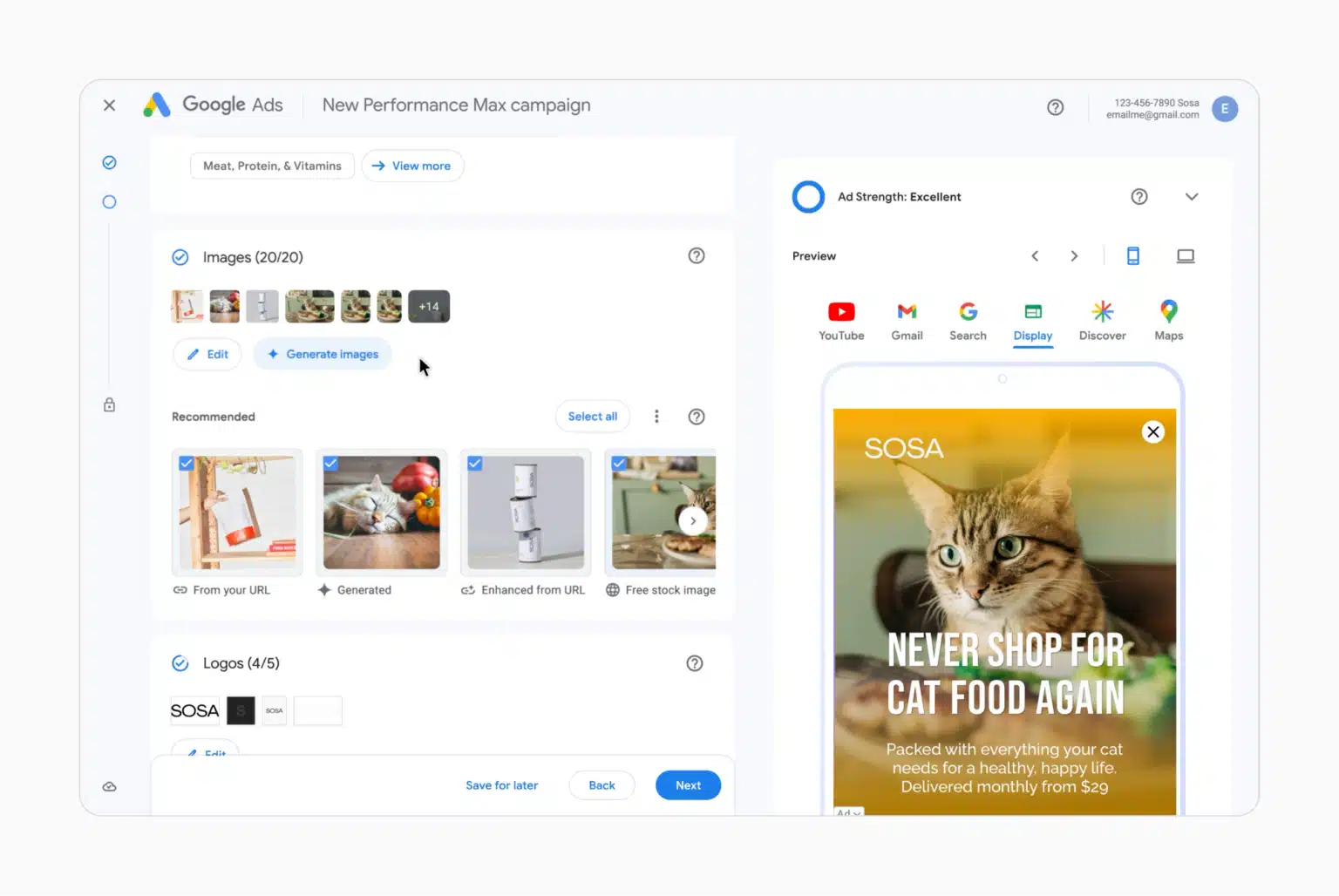
Of course, be mindful. Make sure your negative keywords are set up correctly, and your ad groups are distinct.
Follow the 2026 Google Ads best practices for Performance Max campaigns, including:
- Focusing on and optimising your creative assets (think: the A/B testing approach with diverse creatives, headlines, and descriptions so Google’s algorithms can discover the perfect combination)
- Using audience signals like remarketing lists, custom intent audiences, and Customer Match to narrow down your ideal leads
- Switching to revenue-focused bidding tactics like Maximise Conversions or Target ROAS
- Adding negative keywords to your account
- Using the newer reporting to diagnose where results are actually coming from (don’t guess)
- Treat placement expansion (including Waze and local) as part of your intentional strategy, not a default.
Learn how to maximise your results with Performance Max campaigns in The Ultimate Guide to Performance Max Campaigns.
Audience Targeting in Google Ads: Signals and Exclusions
Audience targeting in Google Ads is changing. Instead of purely targeting people with keywords, Google is giving us more data, but it’s also asking for it in return. And if I had to describe the audience targeting strategy for Google Ads in 2026, it would be:
Signals + exclusions + retention
Best Practices for Google Ads Targeting in 2026
In 2026, audiences are less about hard targeting and more about telling Google what a good customer looks like. Your job is to feed it signals it can trust, and to use exclusions where they protect performance (especially in Shopping):
- Start with first-party signals (Customer Match, remarketing, high-intent segments)
- Set up your conversion tracking properly and ensure you are telling Google about the right conversions (e.g., phone calls vs button clicks)
- Expand once you’ve proven what converts
- (e)Commerce? Make sure your Merchant Centre and product feeds are up-to-date and constantly refreshed
As a Google Ads specialist with over 18 years of experience, I do believe in the power of keywords to steer your account. However, if your campaigns are full of historical conversion data from your ideal customers, it’s worth seeing if Google Ads can attract more of them.
Look into the Customer Match targeting options, allowing you to leverage your first-party data like you used to with Similar audiences and traditional remarketing. (Of course, don’t let go of the reins completely – and if you’re unsure how to implement the strategy, get in touch with me. I’d love to help!)
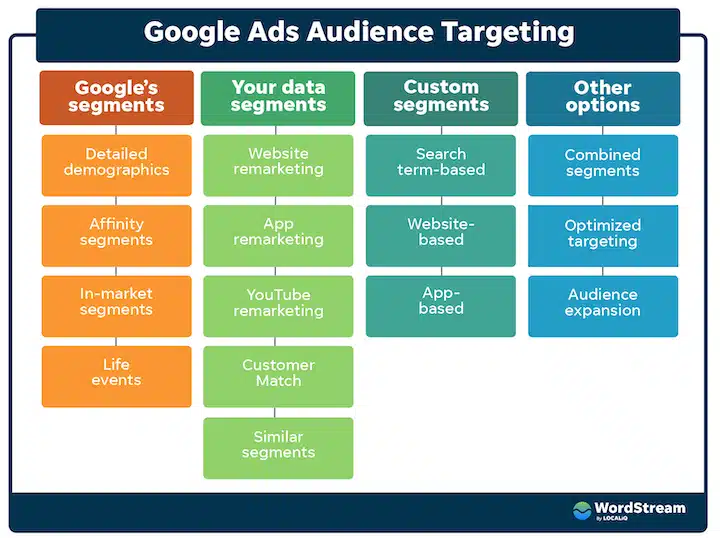
Try Custom Intent and In-Market Audiences in 2026
Based on what you know about your audience, add Custom intent and In-market audiences to your campaigns. These options will allow you to reach people based on their interests, URLs they visited, and apps they’ve used.
For instance, if you’re selling fitness equipment, create a custom audience of users who have searched for terms like “home gym setup” or visited related blogs.
On the other hand, we also have in-market audiences – people actively researching products or services in your industry. These audiences are ready to make a purchase, which makes it easier to generate conversions.
The key difference is that Custom intent audiences are the audiences you define with keywords, URLs, or apps. In-market audiences are segments predefined by Google based on their search behaviour.
And yes, you can use these for your Search campaigns to layer your targeting and make the results even better!
Best Practices for Google Shopping Ads in 2026
If you run Shopping in 2026, you’re not just managing product ads – you’re feeding Google a shopping experience.
Between Lens-driven discovery, audience exclusions, and retention features being taken more seriously, Shopping performance is increasingly tied to how clean (and complete) your inputs are.
Your best practices are simple. Keep:
- Your feed accurate
- Your product data rich
- Your audience strategy intentional, with strong audience exclusions
And don’t forget that Google is now actively trying to create a proper shopping experience with Shopping Ads. This means more retention levers, giving you the ability to not only draw in new customers, but to keep incentivising repeat purchasers and rewarding their loyalty.
Key Google Ads Best Practice in 2026: Always Sanity-Check Automated Suggestions
Many freelance PPC consultants recommend auto-applying Google’s ad recommendations. I’m not one of them. Multiple clients switched to my services because ad agencies automatically applied recommendations. It drove their Google Ads costs sky-high with low conversions.
This matters even more in 2026, because Google is pushing Search toward meaning-based matching (not just keyword wording). With AI Max, broader matching, and more automatically generated variations, you’ll get “help,” but it’s still your job to make sure the help aligns with your business goals and lead quality.
Don’t auto-apply recommendations.
Sanity-check them to ensure they make sense for your campaign goals.
The same goes for AI suggestions. Google does have vast amounts of data, but its AI wants to test it. Testing means mistakes, which isn’t ideal for advertisers who want to lower their CPC.
What to Automate in Google Ads in 2026
Disclaimer: Make sure you have enough historical conversion data in your accounts, or this automation approach won’t work.
- tROAS and tCPA bidding (consider other smart bidding strategies, too)
- Reporting (with scripts)
- Audience expansion (for experimental campaigns)
What Not to Automate in Google Ads
- Don’t auto-apply Google AI’s suggestions to your campaigns.
- Don’t automate audience targeting (wherever possible).
- Don’t automate ad creation (but feel free to test it and see what the results look like).
Targeting and ad creation are such crucial parts of your PPC campaigns that you never want to leave them up to chance or AI. Even though Google’s machine learning is fantastic, it’s still not the same as a PPC expert who understands your audience’s behaviour.
Similarly, I could share an anecdote or two about Google’s automatic ad creation. Even with PMax automated video creation or RSA automatically-created assets, you’re better off creating the ads yourself or hiring an expert.
Maintain control over your ads, especially if you’re in highly regulated industries like Google Ads for weight loss!
Create Your First-Party Data Process and Harness Data
In 2026, third-party cookies are less reliable, and Google is leaning harder on the first-party data you can provide (customer lists, CRM data, and fresh website signals).
If your data is stale, your optimisation gets stale too.
It’s a bit of a conundrum. To stay ahead and reach our ideal customers, we have to test and optimise new campaigns and targeting types. At the same time, because of data privacy, most advertisers can’t fully understand the mechanisms behind their success due to anonymised data from Google Ads.
Build Your First-Party Data Strategy

The best way to adapt is to start gathering data yourself, from setting up Google Analytics 4 to considering cookieless tracking solutions like RedTrack.
Then, integrate your data with Google Ads through the PPID system.
Start by looking at every possible channel you can get customer data from. This includes your Customer Relationship Management software, lead gen forms, and more. If you use multiple advertising channels in your marketing strategy, you’ll want to get data from each.
Then, identify gaps in your sources. For example, you may have only used Google Analytics without a CRM.
It’s crucial to have a goal. Yes, you’ll use this data for advertising, but how?
Decide if you want to visualise the customer journey or split your audience into segments, and identify the right data points you’ll need to harness and contextualise to achieve your goal. Then, stay on top of Google Ads Data Manager changes and centralise your data, so you can personalise your ads!
Ultimately, you should integrate your data. Whether that’s through an analytics tool, in your GA4, or simply by funnelling it to Google Ads, I’ll leave that up to you and your Google Ads management agency.
Go Back to Basics with Google Ads in 2026: What Makes Your Campaigns Tick?
If you know how Google Ads works at its foundations, you’ll be able to adapt to a lack of data.
But first, you have to dive deep into your existing campaigns to identify:
- Why do they perform so well?
- Which strategies are you using? Which aspects of them reach your customers successfully?
- What do your customers’ buyer and keyword journeys look like?
- Which bidding strategies have worked best for you?
In short: you have to break down your success into its components to understand what you can leverage as a Google Ads best practice in 2026.
Google AdWords Best Practice for 2026: There’s No Substitute for Customer Research
Even when Google Ads Search campaigns were at the height of their popularity, and we had plenty of keyword data, I focused on understanding the customers’ keyword journeys:
How do your customers use keywords at different touchpoints in their purchasing journey?
I.e., How can we step into our customers’ shoes using keywords as a proxy for their actions?
With the new types of campaigns we run these days, the question has expanded. In addition to keywords, look at their entire journey: the websites they visit, their social media discussions, and more.
Once you understand your ideal customers’ behaviour, you’ll be set to leverage Google Ads in 2026 with your own best practices.
Google AdWords Best Practice for 2026: Strengthen Your Negative Keyword List
In light of new match types and Google AI’s expanded influence, you have to either:
- be extremely careful, or
- hire a Google Ads coach
to ensure your ads don’t show up for the wrong keywords. Your best (and simplest) ward against losing conversions is strengthening your account-level negative keywords list.
Add all keywords that historically generated no conversions to your list. For example:
- “Free”
- “Samples”
- “Free quote”
- “Cheap”
For example, if you own or advertise a luxury hotel on Google Ads, you’d want to avoid wasting money on clicks from people who are looking for a more affordable deal and won’t turn into a conversion.
And in 2026, don’t treat negative keywords as “Search-only hygiene.” With Performance Max supporting negatives (still limited, but finally useful), you can now prevent PMax from drifting into irrelevant volume. Add exclusions early – it’s one of the easiest ways to reduce wasted spend.
You could even filter out all information keywords if you only run bottom-of-the-funnel campaigns to get purchase-ready leads. For example:
- “Definition of”
- “How to”
Speaking of which…
Clarify Your Account and Campaign Structure
You’ve probably noticed how fuzzy the new keyword-matching methods are. Google is doing this for a good reason: they want us to rely on AI. Now, I love testing the AI features, but they’re not there yet.
Budgets get wasted. Low-quality leads show up in the funnel. I can’t count all the times I’ve audited Google Ads accounts only to see automation and PMax’s “best guidance” run rampant, wasting thousands in spend with nothing to show for it.
So one of the key 2026 Google Ads best practices I’ll share with you today is clarifying your account structure.
You want clean separation where it helps you diagnose performance, and you want your conversion goals and values to be unambiguous so Smart Bidding doesn’t optimise for the wrong thing.
If you go too granular, you starve the algorithm. If you go too blended, you lose insight. Your best practice is finding the middle: enough structure to learn, enough volume to optimise.
Create specific ad groups with corresponding ad copy for each campaign.
Your ads will show only when searchers type your specific queries.
With exact match campaigns, your ad would appear for: “the best coaching programmes for beginner entrepreneurs in 2026.”
It wouldn’t appear for: “the best coaching programmes for entrepreneurs in 2026.”
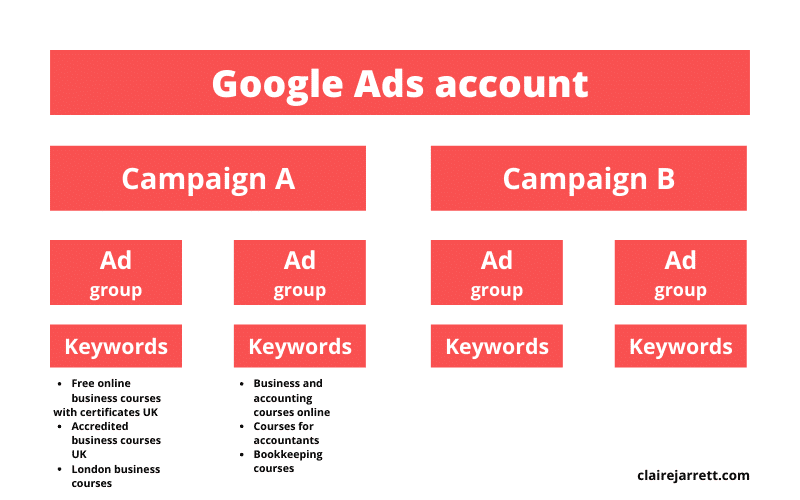
This is an excellent approach if you’ve extensively tested your Google Ads and found your winning formula. Double down on what works to maintain your ROAS as you try new features separately.
Don’t Forget to Clearly Define Performance Max Search Themes
Similarly, Performance Max wants to use AI and ML as much as possible for campaign targeting. However, there are gaps – and you can make sure nothing slips through them by adding search themes to your ads.
They’ll be treated as phrase and broad match keywords, there to expand your placement.
Remember: search themes and signals don’t replace strategy – they’re how you steer automated matching when Google is optimising for meaning, not wording.
Reduce Your Cost Per Lead (and Click) with Google Ads Best Practices for 2026
The average cost per lead (and click) is constantly rising. And with the economically challenging times, it’s crucial to make your ad budget go further in 2026.
Now, you could roll back some of your campaigns or not invest in research, but that wouldn’t put you ahead of the competition.
Instead…
Focus on Lead Quality
Get rid of any keywords and campaigns that no longer serve you by pausing them.
If they drive time-wasters, leads who never go beyond the introductory offer, or simply low-quality prospects that don’t help your business grow year over year, find and eliminate the targeting that’s adding them to your funnel.
For example, if you see that some keywords have a higher-than-average CPA, pause them.
Increase Your Quality Score
The best way to reduce your CPC (and consequently, your cost per lead) is by increasing your ads’ Quality Score:
- Strengthen your account structure. Make sure you have dedicated ads and landing pages for each customer segment.
- Test different keyword match types. For the highest Quality Score, go with “Exact Match.”
- Use relevant ad extensions. For example, try the Google Ads lead form extension to generate leads right in the SERP.
- Research your competitors. What are they doing that’s working well for them? Where are the obvious gaps in their advertising approach? Outshine them and emphasise your differentiators with a different ad experience.
- Google has a native solution to help you find other ads your competitors are running directly from the SERP. Check it out!
- Not sure how to quickly identify and implement the right changes to increase your Quality Score? Get in touch with a Google Ads consultant.
The higher your Quality Score, the lower your CPC!
Consider Remarketing and Competitor Bidding
If your budget is tight, consider remarketing to your existing profitable customers. It’ll be much easier to convince them to buy from your business again since they trust you, but you’ll need a good up-sell or cross-sell offer.
Similarly, bidding on competitors’ brand names has always been my favourite tactic for making an ad budget go further.
These keywords are usually much cheaper than traditional top and bottom-of-the-funnel keywords. You’ll get more bang for your CPC if you showcase how you’re better than the competition.
Google Ads Best Practice for 2026: Set up Your Tracking Properly
If you want to scale your campaigns with smart bidding strategies, you’ll need the right data.
I’ve seen hundreds of ad accounts get lower ROAS than they should be getting just because Google Ads conversion tracking hasn’t been set up properly.
Once your conversion tracking has been enabled, Google will be able to understand your leads’ behaviour and place accurate bids. Still, check them manually to make sure you’re not bidding more than you’d like to.
Additionally, periodically review your existing customers and the services or products they’ve purchased from you. For example, if you’re a cosmetic surgeon using Google Ads, your analysis may find that some campaigns have both lower CPC and higher conversion rates, which is when it makes sense to double down on them.
Ads Appearing in AI Overviews
Google has finally started including ads into the AI Overviews (as originally announced in May 2023).
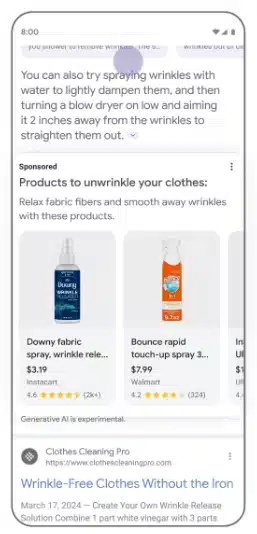
AI Overviews are reshaping SERPs; ads appear around and within AI experiences, and usefulness to specific questions matters more than ever. So, in terms of best practices for AI Google Ads in 2026, consider the following:
- These placements are highly specific, just like the queries. The way we talk to AI assistants is highly personal to us (e.g., instead of “The best hiking trips in England,” we’d be more specific – “What are the best hiking routes I could go on around Bristol if I want a short, 2-5hr hike?“). This means your ads should also include highly specific keyword variants.
- Write ads that answer very specific questions (not generic ‘We’re the best’ copy).
- Yes, in some cases this may mean broad match – but it can also mean knowing your audience granularly and setting up the right campaigns. However, use AI Max and broad match carefully, and regularly review search terms so ‘meaning-based matching’ doesn’t turn into junk leads.
- Expect fewer clicks on some queries. This is normal and to be expected with higher personalisation, so judge success by conversion (value), not CTR.
- Quality Score is still key!
- If you run Shopping Ads, incentivise reviews.
- Pay attention to what Google decides to display. In the above example, there’s the descriptive title, rating, brand name, image, and review stars.
Plan for Fewer Clicks (But Don’t Panic!)
If you’re seeing fewer clicks in 2026, that doesn’t automatically mean performance is down.
User behaviour has changed, and with AI Overviews answering more questions directly, people are clicking less.
However, when they do click, they tend to be further along in their decision-making. This can mean better lead quality and higher conversion rates, even if traffic volume drops.
The critical Google Ads mistake is judging success by old benchmarks. In 2026, you need to watch:
- Conversions
- Conversion value
- Downstream lead quality
… not just clicks or CTR.
The Best Google Ads Bidding Approaches in 2026
If you’re first getting started with Google Ads, it’s normal to start with CPC or CPA. However, as your account gets more data, you’ll be able to fine-tune your bidding strategies to increase your returns while reducing the amount you pay for each lead.
As I said earlier, first set up your conversion tracking. You can monitor offline conversions if they’re relevant to your business, too. Then, consider smart bidding strategies, such as the following:
Target Actions – Not Clicks
As soon as possible, switch to targeting actual actions – be that direct conversions or costs per lead. For example, try the Maximise conversions strategy to get as many conversions as possible within your budget.
Similarly, try tCPA (target Cost Per Action) on the most converting actions. If you rely on offline conversions, you can optimise for the actions that come the closest to it – clicking on your “Call” buttons, filling out forms, etc.
Maximising Your Conversion Value with Google Ads
In addition to optimising for conversions, you can also optimise your Google Ads for conversion value.
For example, suppose you get two types of leads: one reach out for your less expensive services, while others want to undertake big projects.
With the “Maximise conversion value” bidding strategy, Google’s algorithms would target the latter.
When it comes to testing new bidding strategies, consult a professional. With so many Google Ads changes, accidentally ticking a campaign setting that spirals your budget down is (too) easy.
Advertising in 2026 will be exciting, but remember to test first and follow Google’s hype train second.
If you need professional assistance with your Google Ads, I’d love to help! Get in touch with me, and let’s maximise your revenue together.
Ready to take the reins? Achieve rapid Google Ads success in 7 easy steps with your copy of my best-selling Google Ads book!
